
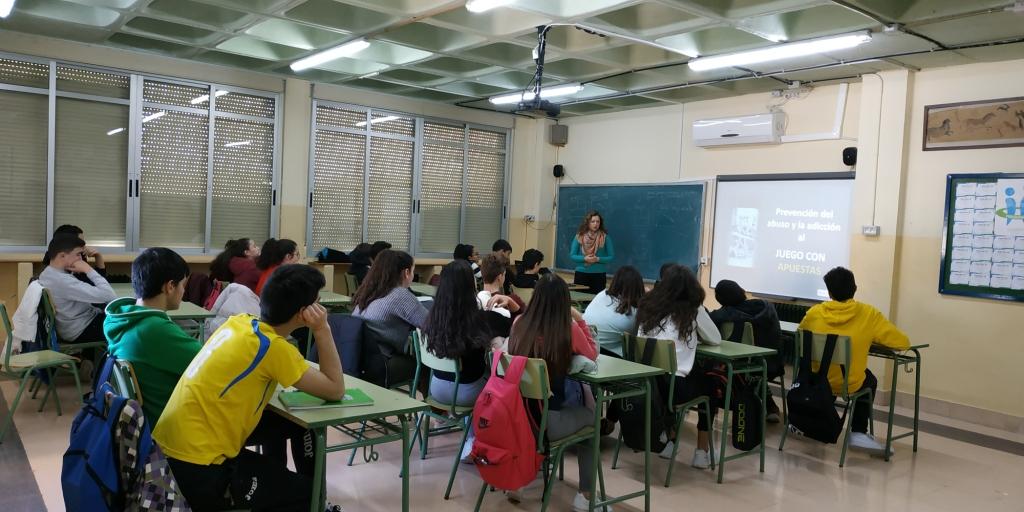
The Department of Circular Economy and Environment presented projects for the renaturalization of schoolyards at six schools in the municipality on Monday and Tuesday. This initiative develops the third strategic line of improvement actions included in the Cieza Green Infrastructure Maintenance Management Plan (2021), aimed at increasing green infrastructure through the naturalization of schoolyards. The other two lines of work correspond to increasing street tree cover and improving parks and gardens.
This transformation aims to increase climate comfort in schools, counteract the effects of extreme weather events, and create spaces with multiple educational and recreational uses that enhance children's development.
To this end, meetings were held with the management teams, the company Doctor Árbol, which is in charge of drafting the reports, and technicians from the Department of Circular Economy and the Environment.
The criteria used to analyze the current state, identify needs, and propose improvements were presented at the meeting. It was observed that, in general, the six school playgrounds analyzed meet common needs, although the constraints, availability of space, presence of play equipment or vegetation, and the problems are different for each school.
The most common needs in schools are the lack of natural or permeable soils, the lack of shade, the lack of vegetation, and the limited opportunities for play options. Furthermore, in the immediate surroundings, there are also problems such as crowding of people and vehicles at the entrances, the lack of vegetation/shade, and the lack of recreational and/or play areas.
“This project aims to provide nature-based solutions (NBS) to existing problems through actions and strategies that can mitigate the phenomena associated with climate change. Furthermore, the presence of nature in schoolyards helps improve air quality, acoustic and thermal comfort, and increases biodiversity, and its elements bring dynamism to the space, allowing for the observation of seasonal and natural cycles that can be used as educational resources,” argued Antonio Moya, the responsible councilor. He added that it is worth noting that “environmental quality in school environments is closely linked to health issues, and direct exposure to nature is essential for child development. Visual access to greenery from a learning space has been shown to reduce stress and mental fatigue and promote peace of mind.”
This project is part of the Cieza 2030 Urban Agenda pilot project, financed with Next Generation funds.
File photo.


 English
  Spanish