
The Department of Circular Economy of the Cieza City Council, together with the parks and gardens maintenance team of Aguas de Cieza, has launched the biological pest control campaign following what was approved in the Strategic Plan for Urban Ecology and Biodiversity, in a clear commitment to the reduction of the use of phytosanitary products in urban environments as established by RD 1311/2012 and the relevant European regulations, whose ultimate goal is to reduce the health risks to which the population is exposed and to improve the health of citizens.
Biological control involves using natural enemies such as parasitoids or predators to combat pests in an environmentally friendly way. "In other words, we try to use nature to our advantage instead of working against it, thus promoting the conservation of the main allies of Cieza's farmers and, consequently, of the Cieza economy: pollinating insects."
Treatment with beneficial insects has begun in various parts of the city to prevent and control tree infestations. These insects, in addition to being beneficial to the flora, act as pollinators for numerous flower species and are more environmentally friendly, since they help reduce or even eliminate the use of toxic chemicals, thus improving the health of city residents and enriching the urban ecosystem.
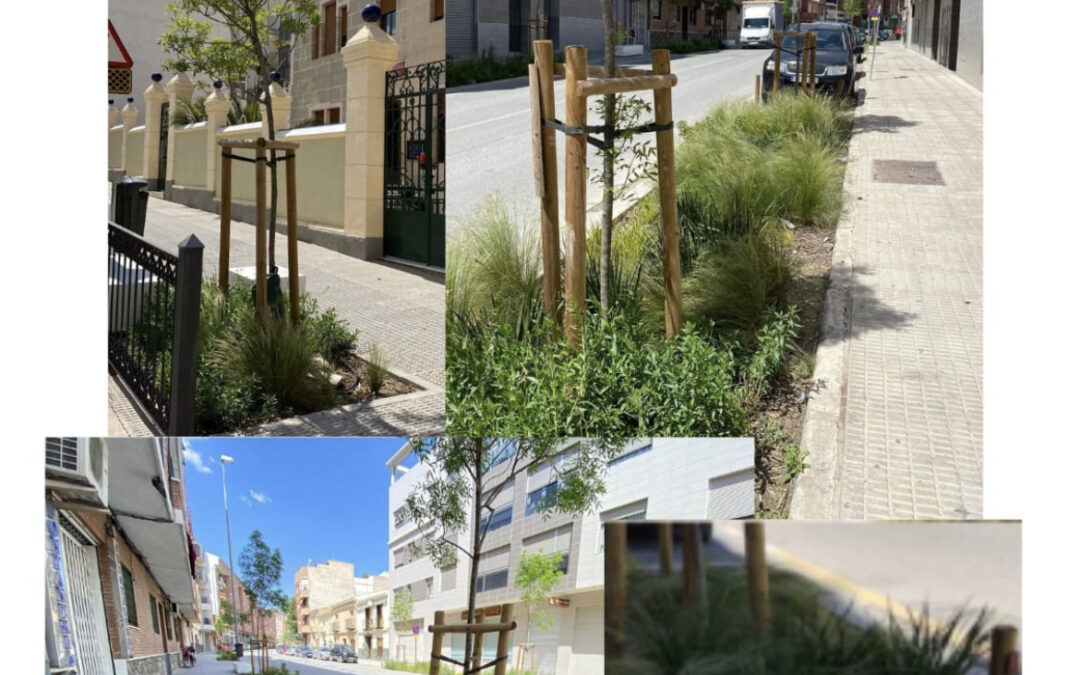
The aim of this system is to achieve a balance between beneficial and harmful insects, in order to keep pests under control while also protecting the environment. However, to achieve this balance, beneficial insects need a refuge to live in the city. Therefore, in Cieza, attractive spaces are being created that serve as shelter for insects, such as flowering tree pits.
"Flowers not only beautify the city, they also bring it to life. Flowers increase biodiversity and enrich urban ecosystems because they attract numerous beneficial insects that help us control pests and pollinate our plants."
The release of insects by the parks and gardens maintenance team of Aguas de Cieza and the company BioNostrum began on May 11, first targeting the jacaranda trees in Plaza España, and then the areas of Juan XXIII, the Paseo, and squares and roundabouts such as Hispanidad and Pío XII. After this initial action, a monitoring and inspection will be carried out to check the evolution of the infestation and determine the next steps to be taken.
In Cieza, the first biological control measures have focused primarily on aphid infestations affecting Jacaranda mimosifolia and Tipuana tipu trees, using hoverfly larvae (Sphaerophoria rueppellii). These small insects, when adults, can be easily mistaken for bees or wasps due to their similar colors, but hoverflies are harmless and excellent pollinators.
"This initiative adds to those already undertaken by the parks and gardens service such as spraying with biological soaps, endotherapy (treatment also carried out in the pine forests of Ascoy) and other measures aimed at minimizing the use of toxic and dangerous chemical products, which not only affect pests, but also other living beings and our own health."
Source: Cieza City Council.
Photo: Archive.


 English
  Spanish