




A new project has arrived, one that the Cieza City Council has been working on for several months. "A project that excites us, one that, once again, we are putting a lot of effort into, and one that we want to make possible for our municipality," said the Councilor for Agriculture, Antonio Moya.
The municipality now has a project underway: the Cieza Peach PGI. "It's been a hard work," Moya explains, "which we began in 2015 when we signed an agreement with the UPCT (the University of the Canary Islands) to scientifically demonstrate (as defined by the PGI quality seal) that the two yellow peach varieties chosen by the Local Agrarian Council, Baby Gold 6 and Romea, possessed and continue to possess better qualities than these same varieties in other geographical areas of Spain: Brix (sugar) levels, color, flavor, texture, size, aroma... A quality seal that our peach has always deserved. Last season, we were able to market it with this seal in the national market, and this coming season, we will be able to do so internationally, as we are approaching the end of the exhibition period and it will finally be granted to us by the European Commission, in Brussels, since it is Europe that grants and awards these quality seals internationally. A quality seal that pays tribute and recognition to the farmers of yesterday and today."
According to the definitions established for quality seals, products with a Protected Geographical Indication (PGI) are those that possess a specific quality, reputation, or other characteristic that can be attributed to a geographical origin (in this case, Cieza), and whose production, processing, or processing takes place in the delimited geographical area from which they take their name. Due to the extensive varietal conversion carried out in the Cieza countryside, the PGI was chosen because there were no native varieties available to qualify for a Protected Designation of Origin, due to the replacement of the old varieties of Pipas, Jerónimos, Marujas, etc.
On the other hand, there are the so-called Guaranteed Traditional Specialties (TSG), which are products with specific features that differentiate them from other foods in the same category, and are produced from traditional raw materials, or have a traditional composition, production method, or processing.
And finally, there are products with a Protected Designation of Origin (PDO), whose quality or characteristics are due to the geographical environment with its natural and human factors, and whose production, processing, and processing always take place in the delimited geographical area from which they take their name.
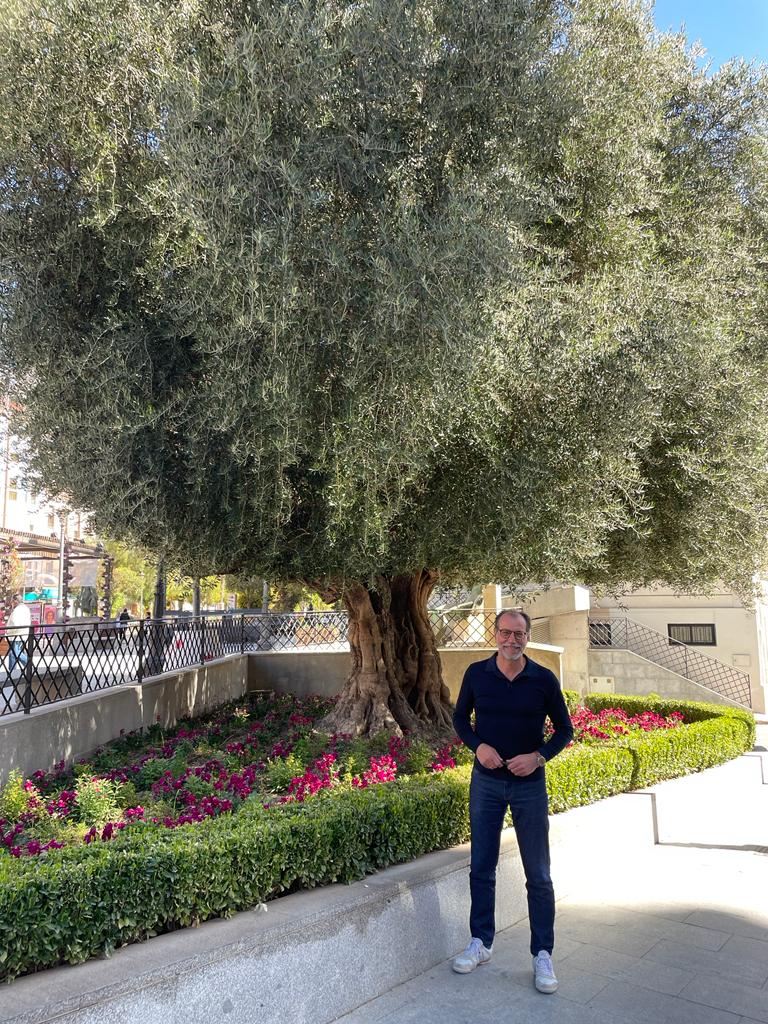
"Well," the councilor adds, "with our experience already in this project made reality of the PGI Melocotón de Cieza," and having studied and followed these definitions, we established contact again with the Polytechnic University of Cartagena in order to propose a new challenge, a new project, a new objective to achieve for our municipality and for our "CIEZA Brand": the Cieza Mollar Olive."
This variety is grown in the Spanish Levant, primarily in the province of Murcia, with 500 hectares of trees scattered throughout the central region. Mollar refers to the delicate flesh.
The variety known as Ciezana or Mollar de Cieza is especially notable in this town due to its widespread production. It has a predominantly green color and is useful in many Spanish foods and dishes. This olive variety is, a priori, closely related to table olive production, due to its morphology and organoleptic characteristics, although the term that gives it its name refers to the extremely delicate nature of its flesh.
In recent years, the use of the Cieza olive variety has been promoted for the production of Extra Virgin Olive Oil, resulting in products that stand out for their extremely high quality.
The variety is listed by the European Union as one of the traditional foods of the Region of Murcia, included in the Spanish inventory of traditional products.
There are several types of Mollar olives: Mollar de Cieza, Mollar de Córdoba, and Mollar Basto. However, the Ciezana olive is registered on the Ministry of Agriculture, Fisheries, and Food's website under the name 'Mollar de Cieza.'
Antonio Moya indicates that “with all this, and although at first we thought that the work to be able to develop this project we had to focus on the ETG, the Traditional Specialties Guaranteed, with the help of the Polytechnic University of Cartagena, and again accompanied and very grateful in this new project by the agricultural engineer and professor of the UPCT, professor and researcher at the Higher School of Agricultural Engineering, Encarna Aguayo from Cieza, has told us that she sees many options to be able to request the DOP for the mollar olive of Cieza, which could be used for pickling and oil”.
"We have achieved a goal by making the PGI (Generally Produced Geographical Indication) for the Cieza peach a reality. We are already working on the next one: the Cieza Olive/Mollar Olive DOP," concluded the head of Agriculture.