


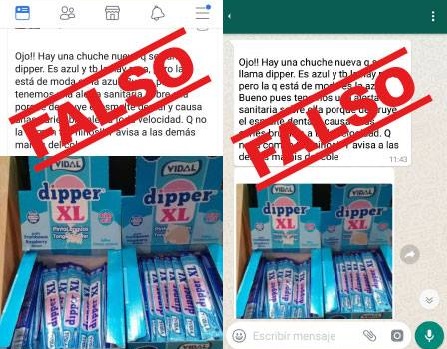


Following recent events in recent days, where claims that a Vidal Golosinas product was harmful to health and that a food alert was issued were spread via WhatsApp and other social media, the company has issued an official statement denying this hoax.
We at Cieza En Tu Mano want to spread this message and support this company and its employees with facilities in our city, which is being harmed by this completely false publication.
OFFICIAL STATEMENT from Vidal Golosinas
At Vidal Golosinas we want to clarify the message that has been spread via WhatsApp and other social media about our product DIPPER:
– This information is false.
– All ingredients are suitable for human consumption and their use is approved by the various European directives.
– Consuming DIPPER does not affect oral health as long as proper hygiene is maintained, just like with other food products. Consumption should be moderate, depending on the parents and/or guardians' control.
Spreading false information is a criminal act. We reserve the right to take legal action against those who spread false information about our products.
We leave you some tips to avoid falling for hoaxes
- Doubt. Reflect and consider the veracity of information, especially shocking news, and don't share it until you've verified that it's true.
- Find the author. Many fake news stories are unsigned.
- Recognize the focus of diffusion. If the story is being told by an unknown website and the news is highly sensational, be wary and check if another, more authoritative website is backing it up.
- Don't trust strangers... Or strange messages from acquaintances. Be suspicious when you receive information on your phone or through social media from people or accounts you don't know, especially when it asks you to open a link or attachment. Even if it's from a friend or acquaintance, they may be spreading a hoax or have their account hacked.
- He is suspicious of dramas and awards. It's quite difficult to win a prize without having done anything in return, such as following a page, giving a like, etc., for starters. So don't trust the idea of being the millionth customer and having won an all-inclusive trip to the Bahamas for two. Alarmist messages that cite an unidentified "friend" or "family member who is a police officer/military officer/doctor" are also unreliable; quite the opposite: they are practically a guaranteed hoax.
- But… Is this in Spanish? Messages that seem to have been translated literally from another language, and therefore the vocabulary, grammatical structures, or syntactical structures grate on your insides... are also unreliable. Not to mention those you receive in another language.
- The police are not going to send you a WhatsApp. When authorities issue alerts to the public, they never do so via WhatsApp or SMS. To ensure a message is genuine, it's best to check the official website or social media accounts of the institution in question.
- Read. But read everything. Something very, very important that's often overlooked: contextualizing all the information in a headline of no more than 10 words isn't easy. Even less so if you want to create an interesting headline. So never, ever, limit yourself to just the headline, especially if it seems sensationalist. Look at the content and be suspicious if you see spelling mistakes, no date, strange content, and few or no sources... Doubt it.