
The Government affirms that both the Atocha culture and musical practice will be safeguarded by public administrations.
The esparto grass culture, present in various municipalities in the region, along with the manual ringing of bells, were declared yesterday by the central government as Representative Manifestations of Intangible Cultural Heritage, which means they will be protected by public administrations.
With this decision, the government noted in a statement, the aim is to "promote the cultural, identity, economic, social, and environmental values" of esparto grass. The Minister of Education and Executive Spokesperson, Isabel Celaá, noted that it is "a thousand-year-old element of Spanish culture" that has traditionally been linked to the agricultural system and work, but has flourished again in recent times thanks to fashion and artisanal culture.
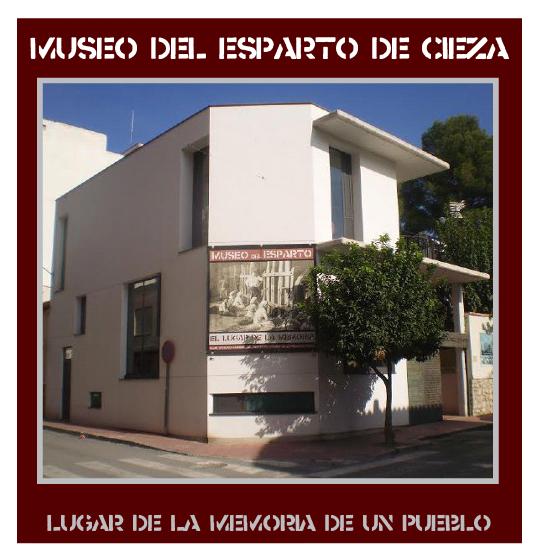
Although esparto grass is a staple in many parts of Spain, it has been transformed for trade and as a craft product in Murcia, Blanca, Calasparra, Archena, Cieza, Lorca, and Águilas, among other towns. Outside the region, it is also present in Jódar, Cabra del Santo Cristo, and Úbeda in Jaén; Cúllar, Benamaurel, and Castilléjar in Granada; Pilas in Seville; and even Madrid.
With this declaration, the Executive Branch aims to prevent the loss of this custom, which has ceased to be practiced in many places, although its knowledge has not yet been lost, and many towers and bells are still in a position to be restored.
The Government emphasizes that there is a "documentation gap" regarding this area of heritage, as only 10% of the bells in Spain are adequately documented. It also points out that the call to protect this custom has been raised by various historical heritage protection associations.
Source: Agencies.


 English
  Spanish