

The Region of Murcia is taking definitive steps toward the launch of the Chicharra Greenway. In the first phase, the renovation work will extend to Cieza, covering a total of 13.7 km. This will mark the start of the restoration of this railway line in the Region of Murcia, as part of its determined commitment to a comprehensive network of Greenways.
The investment in this first section of the Chicharra Green Route will be 1,199,679.47 euros co-financed with Feder funds to 80% and the rest will be charged to the budgets of the Department of Tourism, Youth and Sports of the Region of Murcia. The expected execution period is 8 months.
Among the renovation works for this narrow-gauge railway to Cieza - assigned to FEVE until its integration into Adif - The initial section of the bike lane in the Los Prados area is expected to be improved, as well as the replacement of a 40-meter metal walkway over the Rambla del Judío, where an old railway bridge once stood.
In addition, the project includes road surface and ditch repairs, the installation of several rest areas, signage, and signage, as well as the planting of more than 700 trees, including carob, acacia, mulberry, and pine trees.
This action is expected to be followed by two others, to Jumilla and then to Yecla, currently pending the availability of the land by Adif to advance in the following phases. The aim is also to have a 71 km long route, once the three sections are conditioned (Cieza, Jumilla and Yecla), which will be integrated into the Murcia Region Green Route Network managed by the Murcia Greenways Consortium.
With these following actions, this greenway will connect with the Valencian Community towards Villena, with the already operational section of Las Virtudes. It is worth remembering that in Alicante, the transformation of this railway into Xixarra Green Route The Alicante Provincial Council completed the route in 2007, and currently, you can walk 15 km from the Sanctuary of the Virtues to the municipality of Biar, enjoying the charm of these Alicante mountains and also connecting with the Southeast Way of St. James.
History of the Xixarra / Chicharra Railway
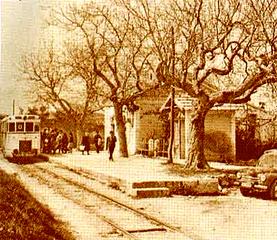
The Villena-Alcoi-Yecla narrow-gauge railway, better known as the "VAY" (or more commonly the Xixarra or Chicharra), despite the name that identified this company, never reached Alcoi. In Muro de Alcoi, it connected with the Alcoi-Gandía line, of the same gauge. This became possible in 1909, 25 years after the inauguration of the first section from Villena to Banyeres.
At the other end, the VAY line connected in Jumilla with the Jumilla-Cieza railway (also narrow gauge), belonging to the Southeast Spanish Railways, which operated this single line. The other section between Muro and Alcoi belonged to the Gandía-Alcoi railway, originally operated by The Alcoy Gandía and Harbour Railway Co. Ltd and opened in 1892.
These lines had a modest lifespan. In 1965, they were taken over by FEVE, continuing the Xixarra trains to the coast, connecting in Gandía with another FEVE line, the one that ran from Carcaixent to Denia and, from there, to Alicante. The company's critical situation led to the closure of both lines in 1969.
This was a modest and almost self-sufficient railway. In fact, its cars and railcars were handcrafted in its workshops, with only the steam locomotives purchased from outside. This train, which traveled at speeds of no more than 19 kilometers per hour, nevertheless constituted the main means of transportation bringing the inhabitants of Yecla and Jumilla closer to the city of Murcia, and connecting the various municipalities as far as Muro de Alcoy (Alicante). Between these municipalities, a service was established for the transport of small goods that constituted the livelihood of many families. It frequently transported flour, oil, and other raw materials in small quantities. On July 1, 1969, it made its final journey due to accumulated debts that made maintenance unviable, as, with an average speed of 14.5 km/h, it could not compete with the road.
Sources of photos and texts: La Vanguardia, La Verdad, and the Spanish Railways Foundation.


 English
  Spanish